The Flu That’s Going Around Right Now: How to Stay Protected with a Functional & Holistic Approach
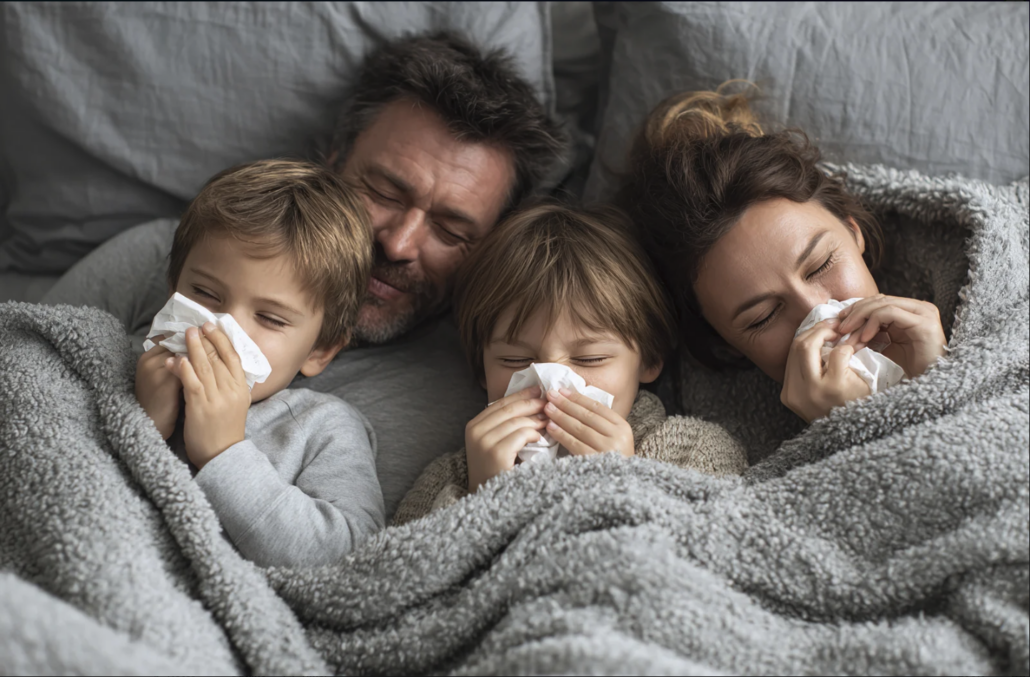
If it feels like more people are getting sick earlier and more intensely this year, you’re not imagining it. This flu season has been widely reported across the news — from public health updates to local clinic alerts — describing unusually high influenza activity and longer recovery times for many patients.
Influenza A (H3N2) strains are leading most reported cases this season, contributing to widespread respiratory illness in communities across the Northern Hemisphere.
At Mountain Roots, we believe in staying informed — not alarmed. Viruses will circulate. The real question is:
How supported is your body’s internal terrain when exposure happens?
Because true health isn’t just the absence of illness — it’s wellness beyond symptoms.
Let’s explore what’s happening this flu season and how a functional and holistic approach can help you stay protected, recover fully, and build long-term resilience.
What’s Circulating This Season?
Global surveillance reports confirm influenza A (H3N2) as the dominant circulating strain this season. H3N2 viruses are known for frequent genetic changes, which can contribute to stronger seasonal outbreaks.
World Health Organization Influenza Monitoring:
https://www.who.int/teams/global-influenza-programme
Common symptoms remain familiar:
- Fever or chills
- Cough and sore throat
- Body aches and fatigue
- Headache and congestion
Because flu symptoms overlap with RSV and COVID-19, testing can be helpful when available, especially for high-risk individuals.
Does the Flu Vaccine Still Matter?
Absolutely. Even when circulating flu strains shift slightly from year to year, vaccination still plays a vital role. It helps:
- Reduce the severity of illness
- Lower the risk of hospitalization
- Protect vulnerable populations, including children, older adults, and those with chronic conditions
Is the vaccine right for you?
If you are generally healthy, the answer is usually yes — getting vaccinated is one of the simplest ways to protect yourself and those around you.
What if I have medical conditions?
There are certain situations where the flu vaccine may not be appropriate or may require special consideration. This is why it’s important to always consult your medical provider. They can guide you based on your health history and current condition, ensuring you make the safest and most informed decision.
From a functional medicine perspective, vaccination is one layer of protection — most effective when paired with strong foundational health practices that support wellness beyond symptoms.
This Year’s Flu: Why Symptoms May Linger
One reason this flu has been getting so much attention in the news is that many people report:
- Persistent fatigue
- Lingering cough
- Brain fog or low stamina
- Longer recovery periods than expected
This doesn’t mean your body is failing. It means your immune, nervous, and energy-production systems are still recalibrating.
In functional medicine, we recognize recovery as an essential phase of healing — not something to rush. Supporting the body beyond the acute illness is key to achieving wellness beyond symptoms, not just “getting through” the flu.
A Functional Medicine Perspective: Strengthening the Terrain
Rather than focusing only on fighting a virus once it enters the body, functional medicine asks:
Is your immune system balanced, nourished, and ready to respond appropriately?
Because the goal isn’t just to avoid illness — it’s to cultivate wellness beyond symptoms, where the body adapts, recovers, and thrives.
How to Prevent the Flu: A Layered Protection Approach
No single strategy is foolproof. The strongest prevention comes from layering simple, effective supports.
Foundational protection:
- Flu vaccination when appropriate
- Regular hand washing
- Avoiding close contact with actively ill individuals
- Supporting indoor airflow and ventilation
Functional prevention strategies:
- Nutrient sufficiency
Immune cells require consistent access to key micronutrients. Vitamin C, zinc, vitamin D, selenium, and a diverse whole-food diet help immune defenses respond efficiently to viral exposure. - Gut health support
A balanced microbiome plays a central role in immune regulation. Probiotic-rich foods (like yogurt, kefir, fermented vegetables) or targeted supplementation may help maintain microbial diversity and immune signaling. - Blood sugar balance
Frequent blood sugar spikes can impair immune function and increase inflammation. Prioritizing protein, healthy fats, and fiber at meals helps stabilize energy and immune responsiveness. - Mitochondrial support
Your energy-producing cells power immune activity. Nutrients such as magnesium, B vitamins, and CoQ10 support cellular energy production — especially important during viral season. - Anti-inflammatory dietary patterns
Reducing ultra-processed foods and emphasizing colorful vegetables, berries, olive oil, herbs, and spices helps keep baseline inflammation lower — creating a more resilient internal environment. - Consistent sleep rhythms
Immune signaling follows circadian patterns. Poor sleep or irregular schedules reduce viral resistance. Consistent sleep and wake times strengthen immune coordination. - Stress and nervous system regulation
Chronic stress disrupts immune balance. Breathwork, meditation, time in nature, gentle movement, and adequate downtime help regulate cortisol and support immune intelligence. - Detoxification and environmental load
Functional medicine recognizes that high toxin or mold exposure can burden immune regulation. Supporting hydration, regular bowel movements, liver-supportive foods, and clean indoor environments reduces unnecessary immune stress. - Movement without overexertion
Moderate daily movement improves circulation of immune cells. Overtraining, however, can temporarily suppress immunity — balance is key. - Nasal and sinus defense
Saline nasal rinses or gentle steam inhalation help maintain mucosal barrier integrity — your first physical line of defense against respiratory viruses.
Prevention isn’t only about avoiding illness — it’s about cultivating wellness beyond symptoms before exposure ever occurs.
Protecting Yourself During Active Flu Season
When flu is circulating heavily in your community, small daily habits matter:
- Carry hand sanitizer when out
- Avoid touching eyes, nose, and mouth
- Consider masking in crowded indoor spaces if high-risk
- Stay hydrated throughout the day
- Don’t ignore early signs of overexertion — rest is protective medicine
Overpushing during viral season lowers resilience. Rest isn’t laziness — it’s immune intelligence.
What If Someone Is Already Sick at Home?
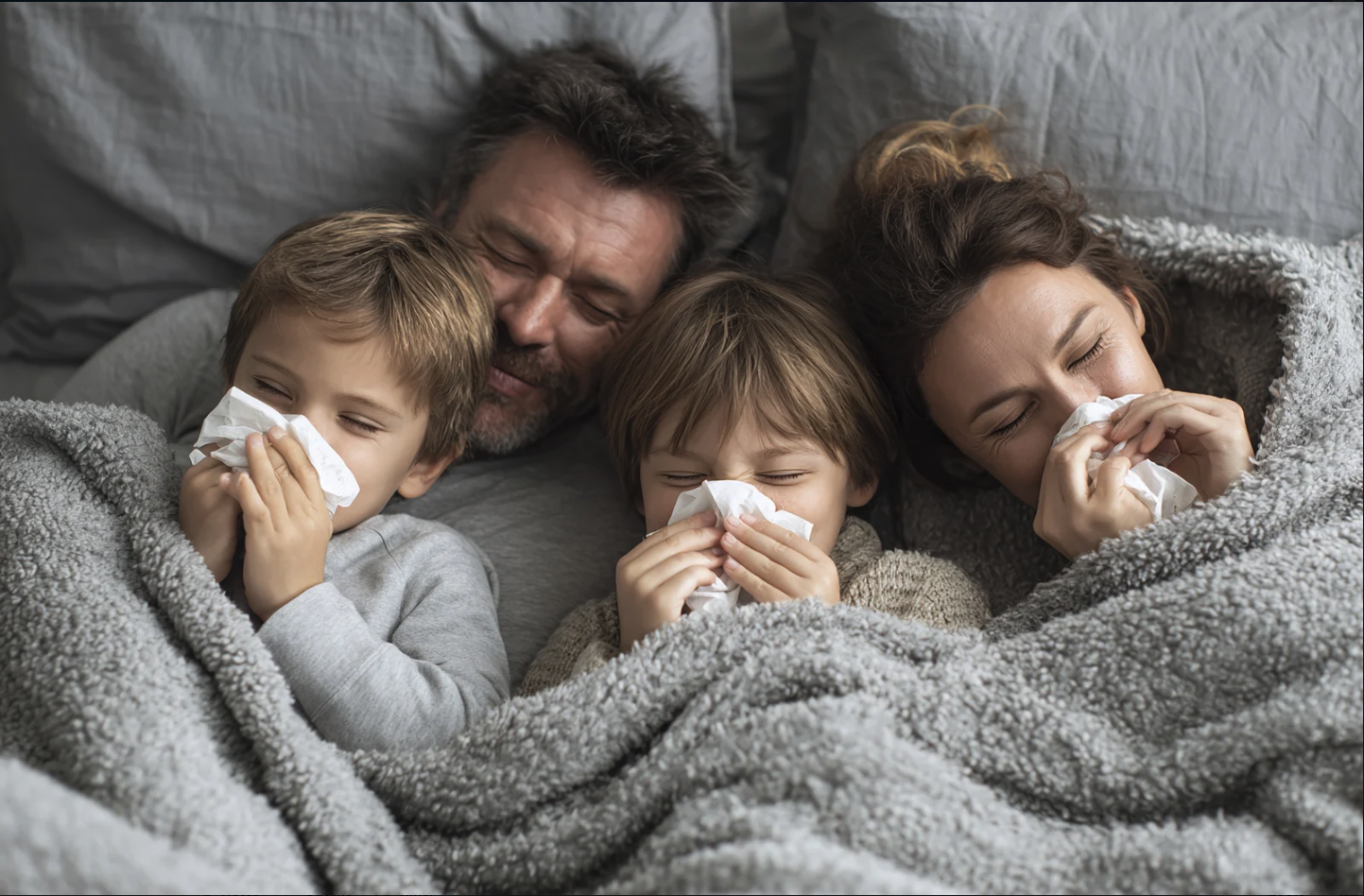
When flu enters the household, supportive care and thoughtful containment help prevent spread and shorten recovery.
To reduce transmission:
- Have the sick person rest in a separate room if possible
- Use separate towels and utensils
- Disinfect frequently touched surfaces
- Improve airflow by opening windows or using fans
To support the person who is ill:
- Encourage hydration with water and warm herbal teas
- Provide easy-to-digest, nutrient-dense meals
- Promote uninterrupted sleep and quiet rest
- Use saline nasal rinses or steam showers for congestion
- Monitor fever and breathing patterns
Seek medical care if fever is persistent, breathing becomes difficult, or weakness is severe. Early antiviral treatment may be appropriate for high-risk individuals.
Is There Anything I Can Do Once I Get the Flu?
Yes — and early support matters.
If you begin feeling unwell, contact Mountain Roots Holistic Healthcare (MRHH) as soon as possible. Our team can design a personalized treatment plan to support your body while it works through the flu. Timely, individualized care may help reduce symptom intensity, support immune function, and promote a smoother recovery.
Supporting Full Recovery: Beyond the Fever
Healing doesn’t end when the fever breaks.
Post-viral recovery support includes:
- Gradually returning to activity
- Continuing nutrient-dense meals
- Prioritizing sleep
- Gentle movement instead of intense exercise
- Reducing stress load
This recovery phase is where wellness beyond symptoms is built — allowing the body to restore energy systems, calm inflammation, and regain balance.
When to Seek Medical Care
Seek prompt evaluation if experiencing:
- Shortness of breath
- Chest pain
- Persistent high fever
- Severe weakness or confusion
Integrative care works best when conventional and holistic approaches partner together.
The Mountain Roots Takeaway
Yes — this flu season has been all over the news.
Yes — symptoms may linger longer than expected.
But fear isn’t the answer. Preparation is.
Vaccination. Nutrition. Sleep. Stress regulation. Botanical support. Smart daily habits. Full recovery care.
This is how we cultivate wellness beyond symptoms — resilient health that extends far beyond flu season.
Your body is designed to heal. Our role is to support it wisely.
Sources & References
World Health Organization Global Influenza Program
https://www.who.int/teams/global-influenza-programme
NIH – Micronutrients and Immune Function
https://pmc.ncbi.nlm.nih.gov/articles/PMC7019735/
NIH – Sleep and Immune Health
https://www.ncbi.nlm.nih.gov/pmc/articles/PMC3256323/