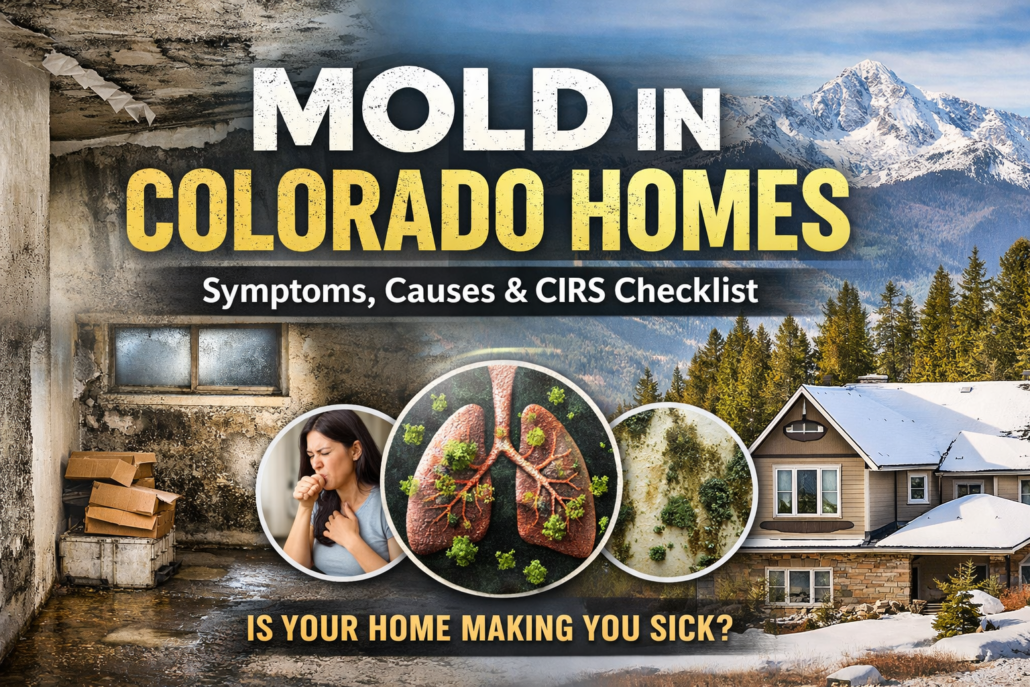
Mold in Colorado Homes: Hidden Risks for Centennial, Aurora, and Denver Homeowners
When people search “mold in Colorado homes,” they’re usually surprised by what they find.
Despite Colorado’s dry climate, homeowners in Centennial, Aurora, Denver, Littleton, and Highlands Ranch are still dealing with hidden mold growth—and the health symptoms that come with it.
👉 The real issue isn’t outdoor humidity.
It’s what’s happening inside your home.
🌱 Can Mold Grow in Colorado Homes?
Yes—and more often than most people expect.
Even in dry climates, mold can begin growing within 24–48 hours after water exposure if materials aren’t properly dried.
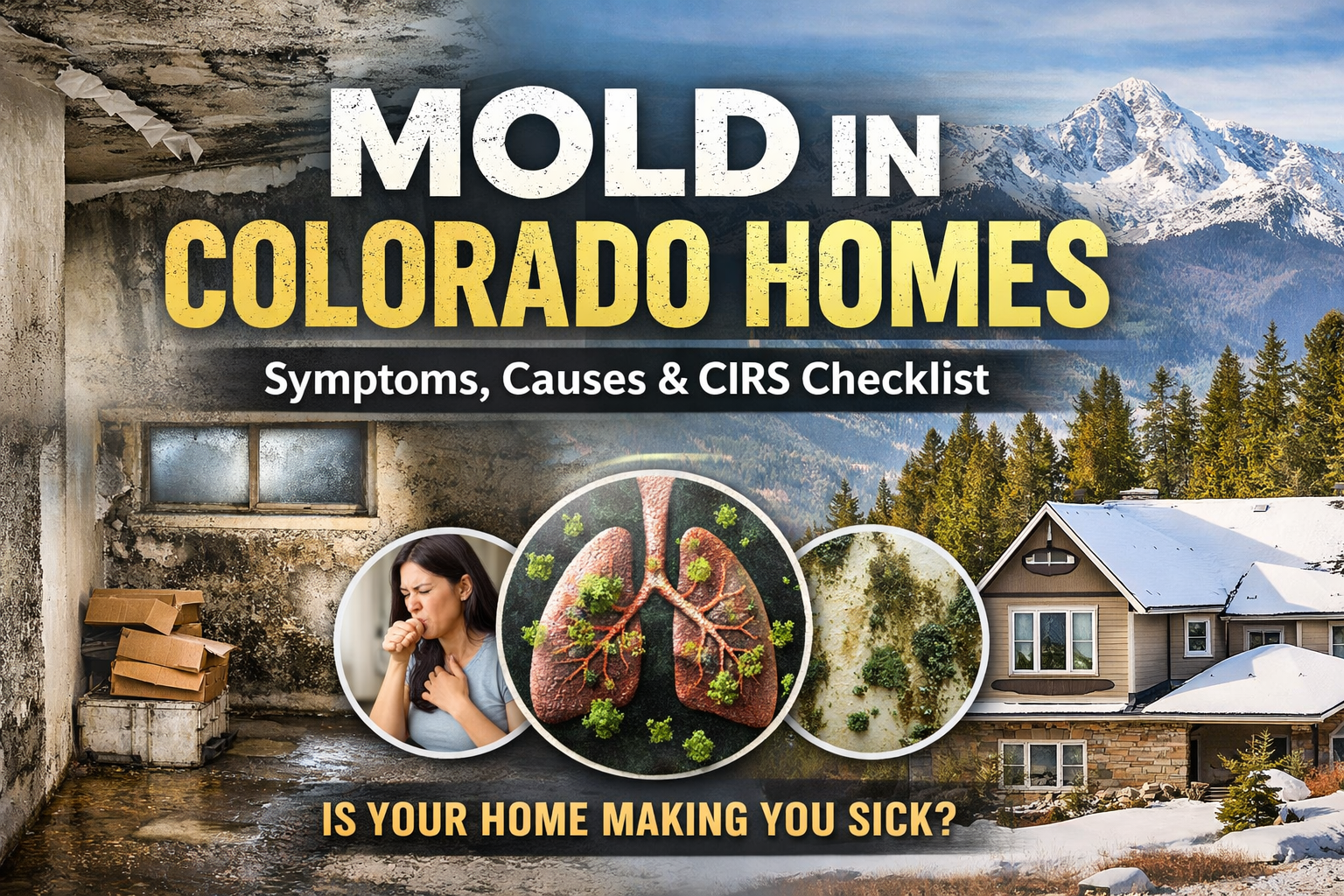
Why Mold Still Happens in Colorado
- Snowmelt and basement seepage
- Roof leaks after storms or hail
- Poor ventilation in newer, tightly sealed homes
- HVAC condensation buildup
- Indoor humidifier use during winter
- Plumbing leaks behind walls
📍 These issues are commonly reported in Centennial, Aurora, and surrounding Denver suburbs, especially in homes with basements.
Watch: The Importance of Understanding Water Damage & Mold in Your Home with Mold Mentor Jessica McQuade
🔍 Where to Check for Mold in Your Colorado Home
Many people search “where does mold grow in houses?”
The answer is often: where you don’t usually look.
Common Mold-Prone Areas
- Bathrooms (tile grout, ceilings, exhaust fan areas)
- Under sinks and inside kitchen cabinets
- Basements and crawlspaces (very common in Colorado homes)
- Around windows (due to condensation)
- HVAC systems and air ducts
- Behind drywall after past leaks
- Under carpets or flooring
Even small amounts of indoor moisture can support mold growth over time—especially in enclosed or poorly ventilated spaces.
🚨 Signs of Mold in Your Home
If you’re Googling “how to tell if you have mold in your house,” these are the most common signs:
- Musty or earthy smell (especially in basements)
- Water stains on ceilings or walls
- Peeling paint or bubbling drywall
- Warped wood or flooring
- Visible black, green, or white spots
- Frequent condensation on windows
👉 Important: Many Colorado homes have hidden mold with no visible signs.
🫁 Mold Exposure Symptoms: What to Watch For
Searches like “mold exposure symptoms” and “why do I feel sick at home?” are increasing—and for good reason.
Research shows that living in damp or mold-affected environments is associated with increased respiratory symptoms and immune responses, including both allergic and non-allergic reactions:
🔗 https://pubmed.ncbi.nlm.nih.gov/17619553/
Common Symptoms Linked to Mold Exposure
- Chronic fatigue
- Brain fog or difficulty concentrating
- Sinus congestion or post-nasal drip
- Persistent cough or breathing issues
- Headaches or migraines
- Skin irritation or rashes
- Mood changes (anxiety, irritability)
Large meta-analyses estimate that exposure to indoor dampness and mold may increase the risk of respiratory and asthma-related symptoms by 30–50%:
🔗 https://pubmed.ncbi.nlm.nih.gov/17661925/
Additional research links mold exposure to:
- Asthma development and worsening
- Chronic cough and wheezing
- Respiratory infections and bronchitis
- Allergic conditions such as rhinitis and eczema
🔗 https://pubmed.ncbi.nlm.nih.gov/21269928/
Long-term exposure has also been associated with increased asthma risk over time:
🔗 https://pubmed.ncbi.nlm.nih.gov/23144822/
🧬 Why Mold Affects People Differently
A common question:
👉 “Why does mold affect me but not others in my home?”
The answer often comes down to individual sensitivity and overall health status.
Higher-Risk Individuals
- People with asthma or allergies
- Children and older adults
- Those with weakened immune systems
- Individuals with ongoing or complex health concerns
- Those with genetic differences in detox pathways
💡 This is why two people can live in the same home—
and have completely different experiences.
❌ Mold Myths vs ✔️ Facts
❌ Myth: “Colorado is too dry for mold”
✔️ Fact: Mold grows from indoor moisture, not outdoor humidity
❌ Myth: “If I don’t see mold, it’s not there”
✔️ Fact: Mold is often hidden in walls, ducts, and basements
❌ Myth: “Only black mold is harmful”
✔️ Fact: Multiple types of mold can impact health
❌ Myth: “Bleach removes mold completely”
✔️ Fact: It may remove surface stains—but not the root cause
❌ Myth: “Mold only causes allergies”
✔️ Fact: Mold exposure is linked to broader respiratory and immune effects
🔗 https://pubmed.ncbi.nlm.nih.gov/21269928/
⚠️ When to Suspect Mold in Your Home
You don’t need visible mold to take action.
👉 Consider looking deeper if:
- Symptoms improve when you leave your home
- You’ve had water damage (even years ago)
- Your basement has a persistent musty smell
- You’re not getting answers from routine care
- Multiple people in your home feel unwell
🧠 Why This Matters More Than You Think
For many people, mold exposure becomes a missing piece of the puzzle.
Instead of only managing symptoms, it’s important to ask:
👉 What could be contributing to them in the first place?
Your environment plays a bigger role in your health than most people realize.
🧠 Could It Be Mold? (Self Check-In)
CIRS Symptom Cluster Questionnaire (Shoemaker-Based)
CIRS is identified not by one symptom—but by patterns across multiple systems.
📋 Instructions
- Review each cluster below
- If you have 1 or more symptoms in a cluster → score 1 point
- Count total clusters
👉 This is cluster-based scoring, not symptom counting
🧩 Symptom Clusters
1. Fatigue
☐ Chronic fatigue
☐ Weakness
☐ Reduced stamina
2. Pain
☐ Joint pain
☐ Muscle aches
☐ Morning stiffness
☐ Cramps
3. Neurological
☐ Headaches
☐ Light sensitivity
☐ Sound sensitivity
☐ Tingling / numbness
4. Cognitive
☐ Brain fog
☐ Memory issues
☐ Difficulty concentrating
☐ Word-finding difficulty
5. Mood
☐ Anxiety
☐ Depression
☐ Irritability
☐ Mood swings
6. Respiratory
☐ Chronic cough
☐ Shortness of breath
☐ Sinus congestion
☐ Post-nasal drip
7. Sinus / Eye
☐ Watery eyes
☐ Red eyes
☐ Blurred vision
☐ Sinus pressure
8. Gastrointestinal
☐ Abdominal pain
☐ Diarrhea
☐ Bloating
☐ Appetite changes
9. Temperature Regulation
☐ Night sweats
☐ Chills
☐ Difficulty regulating temperature
10. Skin
☐ Rashes
☐ Skin sensitivity
☐ Static shocks
11. Immune
☐ Frequent infections
☐ Prolonged recovery
12. Hormonal / Thirst / Urination
☐ Increased thirst
☐ Frequent urination
☐ Hormonal imbalance
☐ Low libido
13. Sleep
☐ Difficulty falling asleep
☐ Difficulty staying asleep
☐ Unrefreshing sleep
🧮 Your Score
Total Clusters: ____ / 13
📊 Interpretation
- 0–3 clusters → Low likelihood
- 4–7 clusters → Possible inflammatory response
- 8+ clusters → High likelihood of CIRS pattern
🧪 When to Consider Testing
If you score 8+, or if symptoms:
- Don’t resolve
- Keep returning
- Worsen in certain environments
…it may be time to look deeper.
Common Next Steps
- VCS testing
- MARCoNS nasal culture
- HLA-DR genetics
- Inflammatory markers (C4a, TGF-β1, MMP-9, VEGF)
🌿 How Mountain Roots Holistic Healthcare Can Help
At Mountain Roots Holistic Healthcare, we work with patients across Centennial, Denver, and surrounding areaswho are trying to understand unexplained, persistent symptoms.
We help by:
- Identifying possible environmental triggers like mold
- Connecting symptoms to deeper patterns
- Guiding appropriate testing
- Supporting recovery and resilience
- Creating personalized care plans
✨ If you’ve been wondering whether mold could be affecting your health… You’re not overthinking it—but you do need the right approach.
👉 Book an intro session with Mountain Roots Holistic Healthcare to start getting clear answers.