Why Cholesterol Is the Starting Point of Your Hormones — And Why Balance Matters
When most people hear the word cholesterol, they immediately think of heart health. But there’s an important truth that rarely gets explained in standard medical visits:
Cholesterol is the starting material your body uses to make hormones.
Yes — the same cholesterol measured on your lab report is the raw ingredient your body needs to produce stress hormones, energy hormones, and sex hormones. This is why at Mountain Roots Holistic Healthcare, we don’t look at cholesterol in isolation. We look at how it connects to your cardiometabolic health and your hormone health — because the two are deeply intertwined.
Let’s walk through this in a simple way.
Everything Starts with Cholesterol
Your body first converts cholesterol into pregnenolone, often called the “mother hormone.”
From pregnenolone, three major hormone pathways branch out:
- The Stress Pathway → Cortisol
- The Energy & Vitality Pathway → DHEA and Testosterone
- The Estrogen Pathway → Estrone, Estradiol, and Estriol
If cholesterol is extremely low, your body may have fewer building materials to support these pathways. That’s why in functional medicine, we focus on individualized balance — not simply pushing cholesterol as low as possible without context.
The Stress Pathway: Cortisol
One branch of pregnenolone leads to cortisol, your main stress-response hormone.
Cortisol plays a vital role in:
- Regulating blood sugar
- Supporting daily energy rhythms
- Helping the body respond to stress
- Controlling inflammation
However, when stress becomes chronic, the body may direct more pregnenolone toward cortisol production. This can leave fewer resources available for other hormone pathways.
This pattern may contribute to:
- Fatigue
- Sleep disruption
- Feeling “wired but tired”
- Reduced libido
The Energy & Vitality Pathway: DHEA and Testosterone
Another branch of pregnenolone produces DHEA, which then converts into testosterone and other androgens.
These hormones support:
- Energy and stamina
- Motivation and drive
- Muscle maintenance
- Metabolic health
- Libido and cognitive clarity
Low DHEA or testosterone may result from:
- Chronic stress
- Aging
- Inflammation
- Metabolic imbalance
When these hormones are under-supported, people often feel like they’ve “lost their spark.”
The Estrogen Pathway: Balance Matters
Androgens can convert into three key estrogens:
- Estrone (E1) — storage estrogen
- Estradiol (E2) — the most active estrogen
- Estriol (E3) — a gentle, protective estrogen
After estrogens are used, they move through detoxification pathways, breaking down into metabolites. Some metabolites are protective and anti-inflammatory, while others may be more stimulating if not cleared efficiently.
This means hormone health isn’t only about how much estrogen you have — it’s also about how your body processes it.
Two people can have similar estrogen levels yet experience very different symptoms depending on their metabolism patterns.
Why This Connects to Heart Health
Here’s where everything ties together:
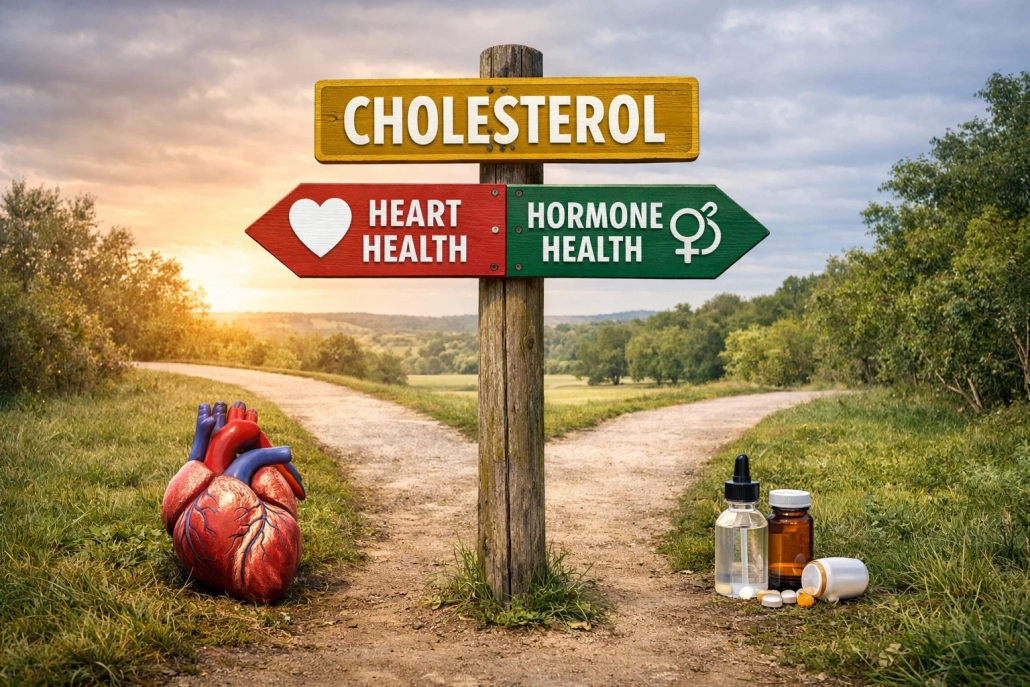
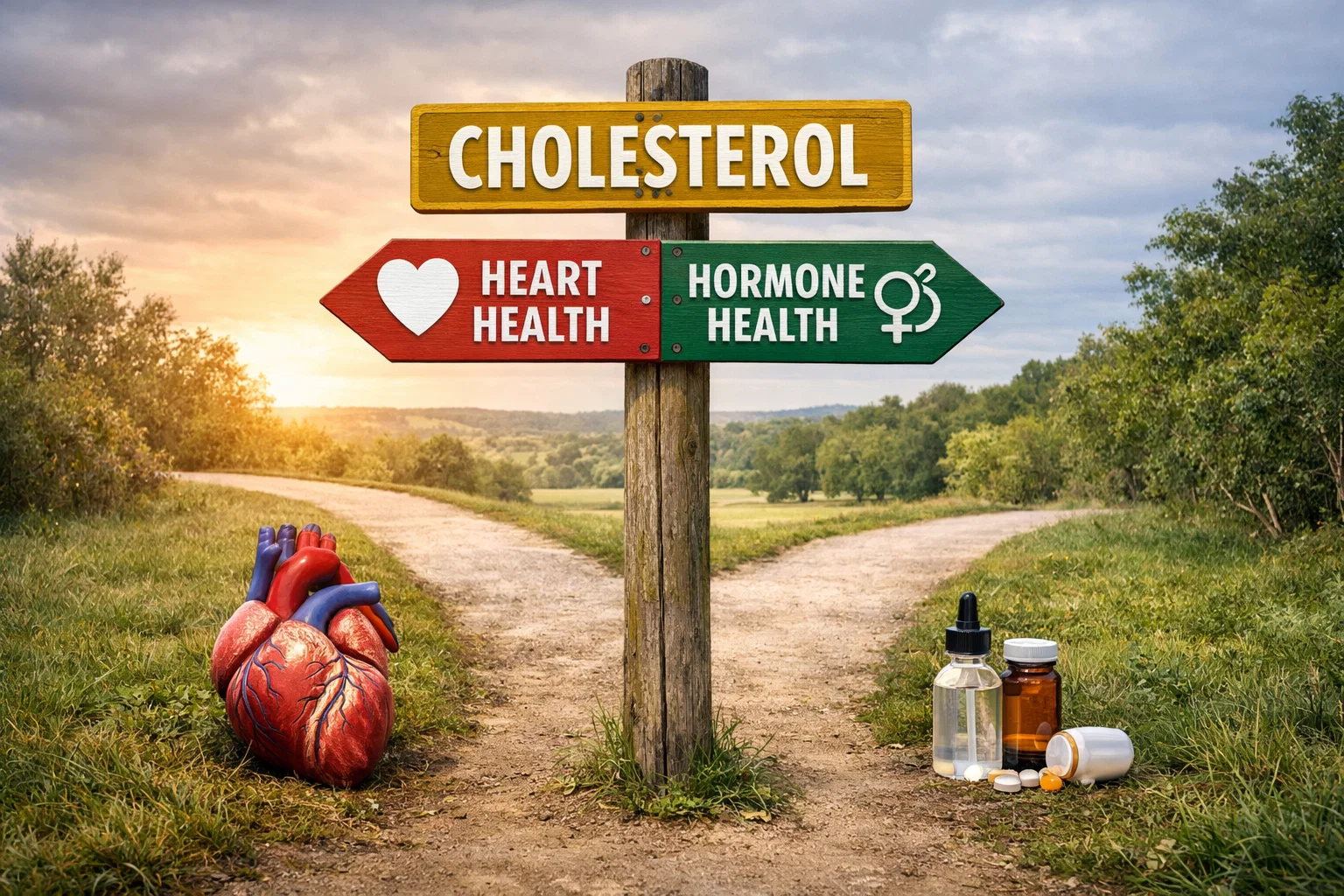
Cholesterol sits at the crossroads of cardiometabolic health and hormone health.
If we only focus on lowering cholesterol without understanding hormone needs, we may unintentionally under-support hormone production.
If we ignore cardiometabolic risk, we miss an opportunity to protect long-term heart health.
The goal is balance.
The Heart Month Reset: Supporting Cardiometabolic Foundations
If you have concerns about cholesterol, blood sugar, or cardiovascular risk, our Heart Month Reset is designed to look deeper than standard screenings.
We assess:
- Lipid patterns
- Blood sugar regulation
- Inflammation markers
- Lifestyle and nutrition factors
- Underlying metabolic stressors
Our goal is to support heart health while still respecting the body’s need for cholesterol as a hormone-building material.
Hormone Optimization: Mapping Your Personal Pathway
Once you understand how hormones flow through these interconnected pathways, the next step is identifying your unique pattern.
Our Hormone Optimization Program evaluates:
- Foundational hormone levels
- Stress hormone rhythms
- Androgen balance
- Estrogen metabolism patterns
From there, we build a personalized plan to support:
- Balanced hormone production
- Healthy detoxification pathways
- Restored energy and mood
- Metabolic resilience
The Takeaway
Your body isn’t broken — it’s following biochemical pathways.
When we understand where those pathways are:
- Overactive
- Under-supported
- Or diverted by chronic stress
we can support real, root-cause healing.
Cholesterol isn’t the enemy. It’s the beginning of your hormone story.
And when heart health and hormone health are supported together, patients often experience:
- More energy
- Better sleep
- Improved metabolism
- Balanced mood
- Renewed vitality
Ready to explore your pathways?
Concerned about cholesterol or cardiometabolic risk?
→ Explore our Heart Month Reset
Struggling with fatigue, mood, or hormone symptoms?
→ Discover our Hormone Optimization Program
Because optimal health begins when we understand the full picture.